Small Space Storage Ideas That Actually Work
Small spaces can feel crowded quickly, but the right storage solutions can make a noticeable difference. The goal is not to fill every available inch with containers. Instead, focus on using overlooked areas, choosing furniture that serves more than one purpose, and keeping everyday items easy to reach.
With a few thoughtful changes, even a small apartment, compact bedroom, or narrow entryway can feel more organized and comfortable. These small space storage ideas are practical, flexible, and easy to adapt to your home.
Start by Removing Clutter
Before buying shelves, bins, or organizers, take a close look at what you already own. Storage works best when it supports the things you use regularly rather than hiding items you no longer need.
Sort your belongings into three groups:
– Keep and use often
– Keep but use occasionally
– Donate, recycle, or discard
Pay special attention to duplicates, damaged items, and belongings that have not been used in a long time. Reducing the number of items you need to store can free up more space than any organizing product.
Once you have sorted everything, group similar items together. For example, keep cleaning supplies in one area, office supplies in another, and seasonal accessories together. Grouping makes it easier to choose the right storage solution for each category.
Use Vertical Space
When floor space is limited, look up. Walls, doors, and the area above furniture often provide valuable storage opportunities.
Install Floating Shelves
Floating shelves are useful in rooms where floor space is scarce. Place them above a desk, sofa, bed, or kitchen counter to store books, baskets, small plants, and decorative items.
To keep shelves from looking crowded, leave some open space between groups of items. Use attractive baskets or matching boxes to contain smaller belongings and create a more uniform appearance.
Add Tall Bookcases
A tall, narrow bookcase can provide more storage than a short, wide unit while using less floor space. Use the lower shelves for heavier items and the upper shelves for lighter belongings that are used less often.
In a bedroom, a tall bookcase can hold folded clothing, accessories, and books. In a kitchen, it can store pantry items, dishes, or small appliances.
Make Use of Doors and Walls
Over-the-door organizers are helpful for shoes, cleaning products, bathroom supplies, and accessories. A few adhesive hooks can also turn the inside of a cabinet door into a useful place for measuring cups, brushes, or hair tools.
Wall-mounted rails and pegboards work well in kitchens, offices, and entryways. They allow you to hang frequently used items while keeping counters and drawers clear.
Choose Furniture With Built-In Storage
Furniture can do more than provide a place to sit, sleep, or work. In a small room, select pieces that offer hidden or built-in storage.
Look for Storage Beds
A bed with drawers underneath can replace a separate dresser in some bedrooms. If a new bed is not practical, use low containers beneath your existing frame. Choose containers with lids or wheels so they are easier to access and protect belongings from dust.
Store seasonal clothing, extra bedding, luggage, or rarely used items under the bed. Avoid keeping everyday essentials there if reaching them requires moving several other items.
Use Ottomans and Benches
A storage ottoman can serve as seating, a footrest, and a place to keep blankets, games, or electronic accessories. A bench with a lift-up seat is useful in an entryway for storing shoes, bags, and outdoor items.
Choose a piece that fits the scale of the room. Oversized furniture may offer more storage but can make a small area feel crowded.
Consider Nesting and Folding Furniture
Nesting tables, folding chairs, and drop-leaf desks give you flexibility without taking up permanent space. These pieces can be expanded when needed and tucked away when they are not in use.
A wall-mounted folding desk is especially useful in a small bedroom or living area. Add a slim shelf above it for notebooks, chargers, and office supplies.
Improve Closet Storage
Closets often have unused vertical space, especially above the main clothing rod. Small adjustments can significantly increase their capacity.
Add a second hanging rod for shorter clothing such as shirts, skirts, and folded trousers. Use shelf dividers to keep stacks of clothing upright and easy to sort. Hanging organizers can hold sweaters, bags, shoes, or accessories.
A few simple closet habits also help:
– Store less-used items on the highest shelves
– Keep everyday clothing at eye level
– Use slim matching hangers to save rod space
– Place shoes in clear boxes or labeled bins
– Rotate seasonal clothing when the weather changes
If the closet has a deep shelf, use bins that pull out easily. This prevents items at the back from being forgotten.
Make the Kitchen More Efficient
Small kitchens benefit from storage that keeps work surfaces clear. Start by using the inside of cabinet doors for pot lids, cutting boards, or small tools.
A narrow rolling cart can fit between cabinets or beside a refrigerator. Use it for pantry goods, cooking oils, or appliances. Because it can move, the cart can also serve as extra counter space when needed.
Other useful kitchen ideas include:
– Add a shelf riser inside cabinets
– Use stackable containers for dry goods
– Install a magnetic strip for metal utensils
– Store pans vertically with dividers
– Place a lazy Susan in a corner cabinet
– Hang mugs beneath a shelf
Keep the items you use most often in the easiest-to-reach locations. Store special-occasion dishes and rarely used appliances higher up or farther back.
Organize the Entryway
A small entryway can become cluttered with shoes, coats, bags, and mail. Create a simple drop zone so each item has a designated place.
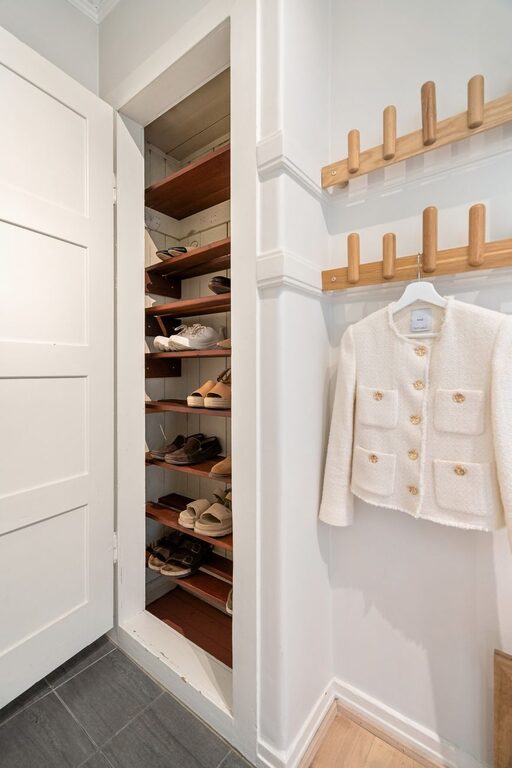
Mount hooks at different heights for adults and children. Add a narrow shelf above the hooks for hats, keys, or small baskets. A slim shoe cabinet can hold footwear without blocking the walkway.
If space is extremely limited, use one wall-mounted organizer with hooks, a mail slot, and a small shelf. Keep only current-season items near the door and store the rest elsewhere.
Use Containers That Fit the Space
Storage containers are most effective when they match the size and shape of the area. Measure shelves, drawers, and gaps before purchasing organizers.
Clear containers are helpful when you need to see the contents quickly. Fabric bins can soften the look of open shelving, while labeled boxes make hidden storage easier to manage.
Avoid filling every container completely. Leave a little room so items can be removed and returned without creating a mess. A storage system should make daily routines easier, not more complicated.
Keep the System Easy to Maintain
The best small space storage solution is one you can maintain. Give each category a clear home and return items after use. If something new comes into the room, decide where it will go before adding it to the space.
Set aside a few minutes each week to clear surfaces, review crowded areas, and return misplaced items. Every few months, check seasonal belongings and remove anything you no longer need.
Small spaces work best when storage is simple, visible, and suited to your routine. By using vertical areas, choosing multifunctional furniture, improving closets, and reducing clutter, you can create a home that feels more open without adding extra square footage.